
Currently Empty: $0.00

 Ifat Naseem
- April 4, 2026
- Comment 0

Introduction
This Simple Math Trick Can Help You Predict Profits (Yet Few People Use It) — and once you understand it, you’ll wonder why you didn’t apply it sooner. Most people calculate profit only after taking action, but there’s a smarter, math-based approach that lets you estimate outcomes before you invest your time, money, or effort. It’s widely used in trading, business, and freelancing, yet very few beginners actually apply it.
The standard formula most people know is:
Profit = Selling Price − Cost Price
This formula is correct, but it only tells you what already happened — it doesn’t help you decide:
- Whether an opportunity is worth taking
- How much risk is involved
- Whether the potential return actually justifies the investment
That’s where this trick comes in — helping you evaluate a decision before committing, not just measure the result afterward.
This Simple Math Trick Can Help You Predict Profits (Yet Few People Use It)
That’s ultimately why this approach works so reliably — it doesn’t rely on luck or emotion, just consistent calculation. Once this becomes a habit, you’ll naturally start evaluating every decision — big or small — through the lens of risk versus reward, rather than jumping in blindly.
That’s why many individuals:

- Lose money in trading by entering bad trades
- Accept low-paying work without evaluating better options
- Make poor financial choices based on guesswork instead of numbers
The key difference is simple: successful people estimate potential profit before they act — not after.
They rely on one mathematical concept that most people overlook entirely.
The Core Concept: Risk-to-Reward Ratio
The technique is known as:
This technique is known as the Risk-to-Reward Ratio (RRR).
It’s widely used by:
- Experienced traders
- Investors
- Business professionals
Yet, it remains largely underutilized by beginners — even though it’s simple enough for anyone to apply.
📊 Understanding Risk-to-Reward Ratio
This concept compares two things:
- Risk: The amount you might lose if the trade or decision doesn’t work out
- Reward: The amount you expect to gain if it does
📌 Formula:
Risk-to-Reward Ratio = Potential Loss ÷ Potential Profit
Easy Example
Imagine you plan to invest Rs. 1,000:
- Maximum loss = Rs. 200
- Expected gain = Rs. 600
Calculation:
RRR = 200 ÷ 600 = 1:3✅ Interpretation: You are risking Rs. 1 to potentially earn Rs. 3 — this is considered a strong and favorable opportunity.
Why This Method Is So Effective
Most people focus only on increasing profits. Experienced traders and investors, however, focus on two things:
- Limiting potential losses
- Maximizing gains when a trade succeeds
Even if you don’t win every time, this balance lets you stay consistently profitable over the long run — which is exactly what makes this simple math approach so powerful.
A Smarter Way to Estimate Profit
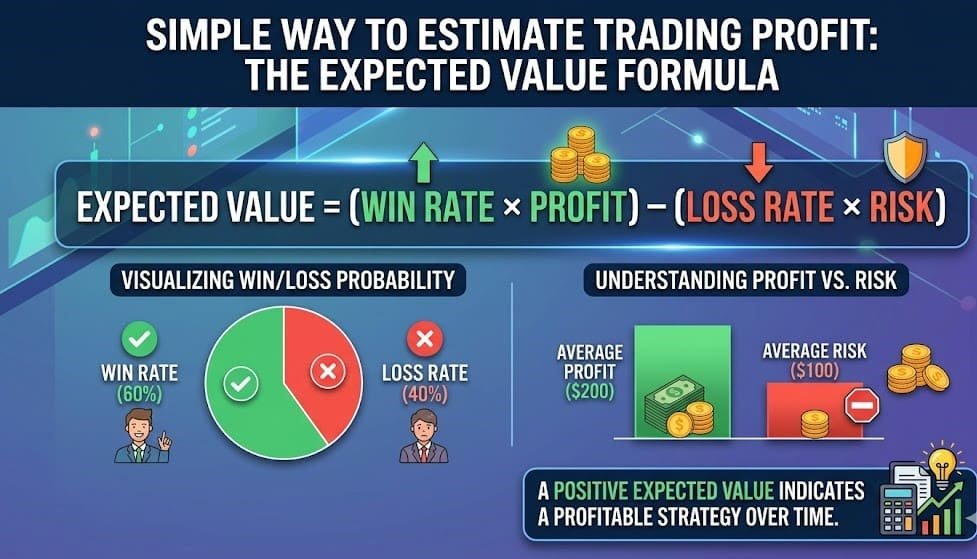
To go a step deeper, you can use a slightly more advanced — but still simple — formula: the Expected Value Formula.
Expected Value = (Win Rate × Profit) − (Loss Rate × Risk)This formula accounts for how often you actually win, not just how much you win — giving you a more realistic picture of your long-term profitability.
Example Calculation
Assume:
- Win rate = 50%
- Profit per win = Rs. 600
- Loss per trade = Rs. 200
Calculation:
Expected Value = (0.5 × 600) − (0.5 × 200)
               = 300 − 100
               = Rs. 200
🎯 Outcome: Even with a 50/50 win rate, you still generate a positive expected profit of Rs. 200 per trade over time.
This highlights the importance of structured, math-based decision-making over guesswork.
Why Most People Don’t Use This Strategy
Despite its simplicity, many people ignore this concept because they:
- Rely on instinct rather than calculation
- Chase quick gains without planning
- Lack a basic understanding of probability
- Fail to evaluate risk properly before acting
In short, they prioritize earning but neglect protection — and that imbalance is often what separates consistent winners from those who lose money over time.
Practical Applications in Everyday Life
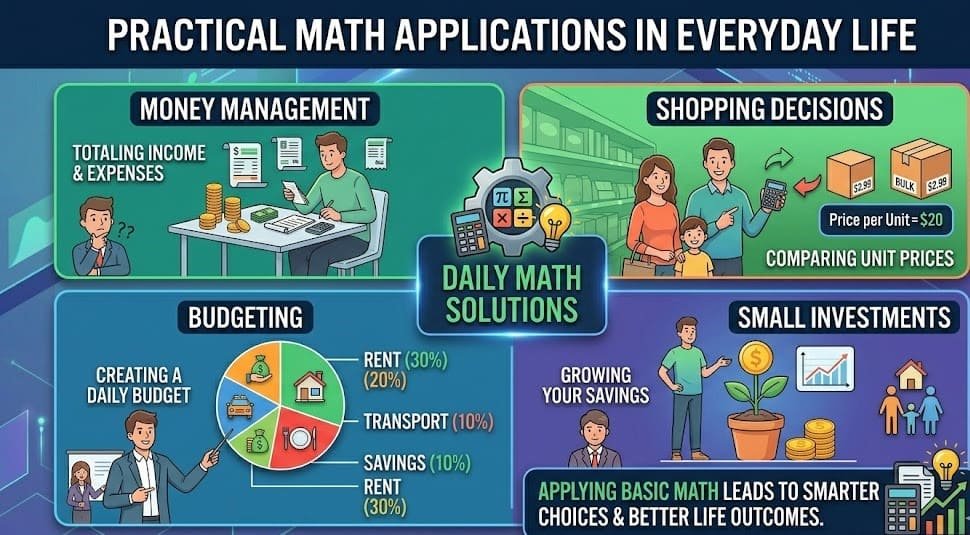
1. Trading and Investing
Before entering a trade:
- Define how much you’re willing to lose
- Set a realistic profit target
- Ensure the risk-to-reward ratio is at least 1:2
This disciplined approach improves your odds of long-term trading success, even if individual trades don’t always go your way.
2. Business Planning
Before starting a project:
- Calculate the total cost involved
- Estimate potential returns realistically
- Compare the risk against the potential reward
Avoid ventures where the risk is high but the potential return is low — the math should always justify the risk you’re taking.
3. Freelancing Decisions
When choosing which projects to take on:
- Time and effort = your risk
- Payment = your reward
Focus on opportunities that offer better value for your time — a high-paying project that takes twice as long may not actually be the better deal.
4. Daily Financial Choices
This concept can even guide everyday decisions like:
- Major purchasing decisions
- Investing in courses or skill-building
- Marketing or advertising spending
Always evaluate whether the expected outcome justifies the cost — the same risk-to-reward thinking applies far beyond trading.
Mistakes to Watch Out For
Even when you understand the concept, these common mistakes can undo your results:
❌ Skipping calculations entirely and relying on gut feeling
❌ Ignoring potential losses
❌ Choosing low-reward opportunities
❌ Making emotional decisions instead of calculated ones
❌ Overestimating expected returns
Poor planning leads to poor financial results.
Recommended Risk-to-Reward Ratios
| Ratio | Explanation | Suggestion |
|---|---|---|
| 1:1 | Equal risk and reward | ❌ Not recommended |
| 1:2 | Balanced approach | ✅ Acceptable |
| 1:3 | Strong opportunity | 🔥 Highly recommended |
| 1:5 | High reward potential | 🚀 Ideal but rare |
Key Insight from Professionals
You don’t need a high success rate to make money.
For examOne important lesson: you don’t need a high success rate to make money.
For example, if you’re:
- Winning only 40% of the time
- Using a 1:3 risk-to-reward ratio
You can still end up with an overall profit — this is exactly how experienced traders and investors maintain long-term consistency, even with more losses than wins.
Internal Resources to Master Profit Prediction
To deepen your understanding, explore these related guides on our website:
These resources will strengthen your understanding and help you apply these math concepts to real financial decisions.
External Resources to Understand Profit Prediction Better
To fully understand how This Simple Math Trick Can Help You Predict Profits (Yet Few People Use It) works in real-world scenarios, it’s helpful to explore trusted financial and educational resources. These external sources provide deeper insights into risk management, probability, and smart decision-making.
Learn the basics of risk vs reward from Investopedia:
Understand probability concepts from Khan Academy:
Conclusion
At its core, this simple math trick can help you predict profits long before you take any real risk. By using the risk-to-reward ratio and expected value formula, you shift from guessing to calculating — evaluating whether an opportunity is truly worth pursuing before you commit your time or money.
Whether you’re trading, running a business, freelancing, or simply making everyday financial decisions, this approach helps you protect your downside while staying open to meaningful upside. The math doesn’t guarantee success, but it dramatically improves your odds by replacing emotion with logic.
Yet few people use it — not because it’s complicated, but because it requires patience and discipline that guesswork doesn’t. Once you start applying this simple math trick to your own decisions, predicting realistic outcomes becomes second nature, and you’ll quickly understand why experienced professionals rely on it daily.
Start using this approach in your very next decision, and you’ll see the difference calculated thinking makes over blind guessing.
Frequently Asked Questions
Q1: What is the easiest way to estimate profit in advance?
Using the risk-to-reward ratio is one of the simplest ways to evaluate whether a decision is likely to be profitable before you take action.
Q2: Is this method suitable for beginners?
Yes — it only requires basic math and can be applied immediately to real-life decisions, whether in trading, business, or everyday spending.
Q3: What ratio is considered good?
A ratio of 1:2 or higher is generally considered effective for long-term success, with 1:3 being ideal for most traders and investors.
Q4: Can this be applied outside trading?
Absolutely. It works well in business planning, freelancing, investing, and everyday financial decisions like purchases or course investments.
Q5: Why do people still lose money?
Because most people calculate profit after making a decision instead of analyzing risk and reward beforehand — reacting instead of planning.