
Currently Empty: $0.00
 Ifat Naseem
- February 7, 2026
- Comment 3

Introduction: The Real Reason Traders Win or Lose
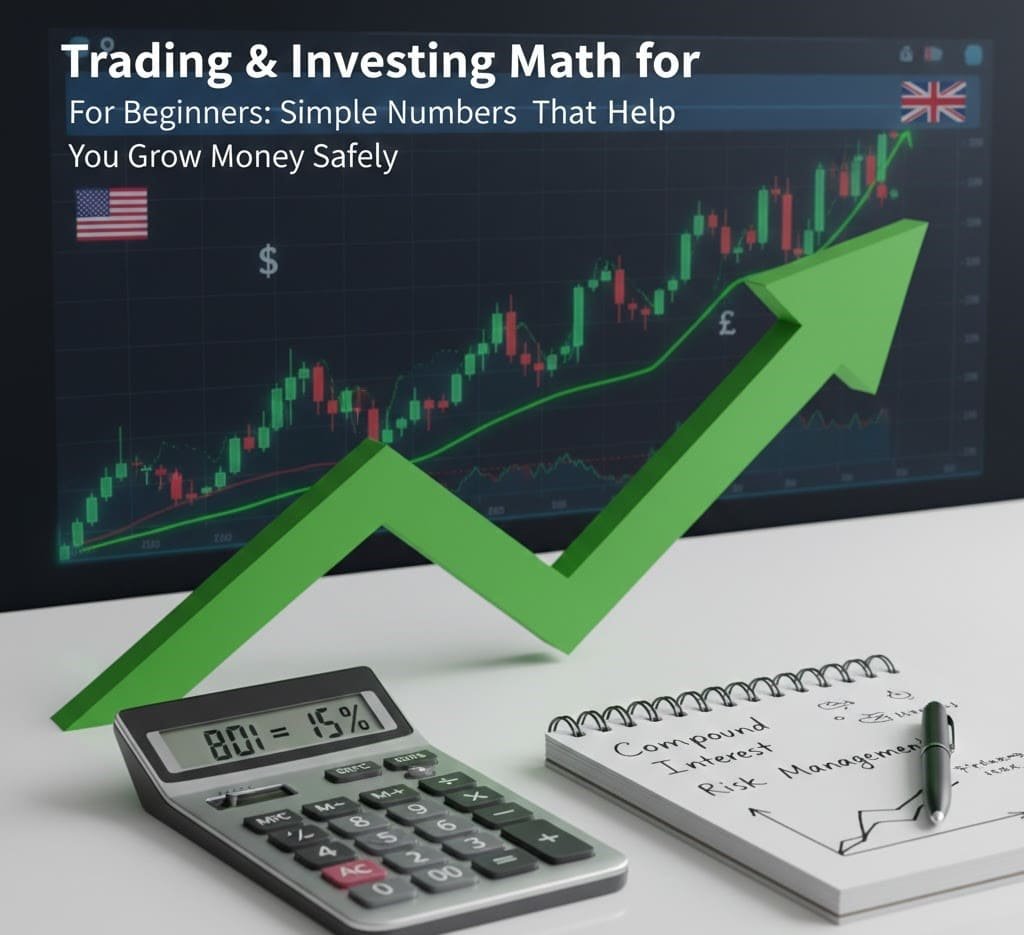
Trading & Investing Math for Beginners is essential for making informed, secure, and profitable decisions in the world of financial markets. Beginners who learn trading and investing math for beginners can move away from guessing or emotional choices, accurately evaluate risk, and protect their investments from unnecessary losses. Even mastering simple calculations can greatly improve consistency and long-term trading outcomes.
Trading & Investing Math for Beginners also offers a structured approach to analyzing opportunities, managing capital, and making logical financial decisions. When applied correctly, trading and investing math for beginners helps traders reduce losses, increase potential gains, and maintain discipline in fluctuating market conditions.For a deeper dive into essential formulas used by top traders, check out our guide on Stock Market Math: 7 Key Calculations Used by Profitable US & UK Traders.
Understanding trading and investing math for beginners allows new traders to see how numbers directly impact profits, losses, and long-term growth across stocks, forex, crypto, and other investment avenues. By practicing trading and investing math for beginners, beginners can build repeatable strategies that are measurable, predictable, and geared toward sustainable success.
Another advantage of trading and investing math for beginners is learning how compounding and risk-to-reward ratios work together. Even small, consistent gains can accumulate into substantial wealth when trading and investing math for beginners is applied correctly, making it a must-have skill for anyone aiming for long-term financial growth.
Mastering trading and investing math for beginners also helps new traders make smarter decisions when it comes to choosing assets, timing trades, and evaluating market trends. By applying trading and investing math for beginners to real-world scenarios, beginners can measure potential profits, calculate risk accurately, and develop strategies that minimize losses. This approach ensures that every trade or investment is backed by numbers, making trading and investing math for beginners a vital skill for anyone serious about financial growth.

Why Ignoring Math Leads to Losses
Trading without calculations is pure guesswork.
Beginners who skip math often:
Risk large amounts on one trade
Enter and exit emotionally
Miscalculate profits
Lose capital quickly
Math introduces structure, discipline, and control, which are essential in financial markets.
Understanding Percentage Profit and Loss
Percentages are the backbone of trading and investing math for beginners.
Example:
Initial investment: $1,000
Value after trade: $1,100
Percentage gain:
(
1100
−
1000
)
÷
1000
×
100
10
%
(1100−1000)÷1000×100=10%
Important Insight:
A 10% loss requires more than 10% gain to recover
Losses grow faster than profits
This is why protecting capital is more important than chasing big wins.
Risk Management: How Much Should You Lose Per Trade?
Successful traders limit risk on every trade.
Safe Risk Formula:
𝐴
𝑐
𝑐
𝑜
𝑢
𝑛
𝑡
𝐵
𝑎
𝑙
𝑎
𝑛
𝑐
𝑒
×
𝑅
𝑖
𝑠
𝑘
𝑃
𝑒
𝑟
𝑐
𝑒
𝑛
𝑡
𝑎
𝑔
𝑒
AccountBalance×RiskPercentage
Example:
Account size: $5,000
Risk per trade: 2%
5000 × 0.02 = $100
No matter what happens, your maximum loss stays controlled.
Risk-to-Reward Ratio: Making Fewer Wins Profitable
Winning every trade is impossible—but math makes fewer wins enough.
Formula:
𝐸
𝑥
𝑝
𝑒
𝑐
𝑡
𝑒
𝑑
𝑃
𝑟
𝑜
𝑓
𝑖
𝑡
÷
𝑃
𝑜
𝑡
𝑒
𝑛
𝑡
𝑖
𝑎
𝑙
𝐿
𝑜
𝑠
𝑠
ExpectedProfit÷PotentialLoss
Example:
Risk: $100
Target profit: $300
300
÷
100
1
:
3
300÷100=1:3
With this ratio, even a low win rate can generate consistent profits.
Position Sizing: Avoiding Overexposure
Understanding position sizing is a key part of trading and investing math for beginners. It allows traders to determine how many shares, lots, or units to buy or sell without putting too much of their account at risk. By using trading and investing math for beginners, you can calculate the right position size based on your risk level and stop-loss limits. This approach ensures that even if a trade goes against you, the losses remain controlled. Beginners who apply trading and investing math for beginners consistently can make disciplined, well-measured trades while avoiding impulsive decisions. Mastering position sizing is a crucial step toward long-term success in trading.
Position sizing helps decide how many shares, lots, or coins to trade.
Formula:
𝑅
𝑖
𝑠
𝑘
𝐴
𝑚
𝑜
𝑢
𝑛
𝑡
÷
𝑆
𝑡
𝑜
𝑝
−
𝐿
𝑜
𝑠
𝑠
𝐷
𝑖
𝑠
𝑡
𝑎
𝑛
𝑐
𝑒
RiskAmount÷Stop−LossDistance
Example:
Allowed risk: $100
Stop-loss gap: $5
100
÷
5
20
𝑢
𝑛
𝑖
𝑡
𝑠
100÷5=20units
This keeps losses predictable and removes emotional decision-making.
Return on Investment (ROI): Measuring Trading Success
ROI shows whether your strategy is truly profitable.
ROI Formula:
(
𝑁
𝑒
𝑡
𝐺
𝑎
𝑖
𝑛
÷
𝑇
𝑜
𝑡
𝑎
𝑙
𝐼
𝑛
𝑣
𝑒
𝑠
𝑡
𝑚
𝑒
𝑛
𝑡
)
×
100
(NetGain÷TotalInvestment)×100
Example:
Capital invested: $2,000
Profit earned: $400
400
÷
2000
×
100
20
%
400÷2000×100=20%
ROI allows you to compare strategies and markets logically.
Compounding: Turning Small Gains into Big Results
Compounding is one of the most powerful concepts in investing math.
Example:
Monthly growth: 5%
Starting capital: $1,000
After one year, the value becomes far higher than simple addition.
Consistency beats aggressive trading every time.
Win Rate vs Profitability: What Beginners Get Wrong
Many traders focus on being right most of the time. Math says otherwise.
A trader can:
Win fewer trades
Still grow money
As long as average profits exceed average losses, the strategy works.
How Math Reduces Emotional Trading
Using numbers helps traders:
Stay calm during losses
Follow rules instead of feelings
Avoid revenge trading
Build long-term confidence
Math creates discipline, which is the foundation of success.
Tools That Make Trading Math Easy
Beginners can apply trading calculations using:
Online position size calculators
Excel or Google Sheets
Broker profit/loss tools
Trading platforms like TradingView
No complex systems required—just consistency.
Conclusion: Math Is the Real Edge in Trading
Trading and investing math for beginners is not optional—it’s essential.
You don’t need:
❌ Predictions
❌ Signals
❌ Guesswork
You need:
✅ Risk control
✅ Percentage calculations
✅ Smart position sizing
✅ Long-term thinking
Mastering these basics puts you ahead of most beginners.
In summary, trading and investing math for beginners is more than just numbers—it’s a critical tool for making informed, disciplined, and profitable decisions in financial markets. Beginners who focus on trading and investing math for beginners gain the ability to calculate risk, set realistic profit goals, and manage their investments logically rather than emotionally.
By applying trading and investing math for beginners, traders can better understand market patterns, measure potential gains and losses, and create repeatable strategies that lead to long-term success. Whether you’re investing in stocks, crypto, forex, or other financial instruments, mastering trading and investing math for beginners is essential for building confidence, reducing mistakes, and growing wealth consistently.
Frequently Asked Questions
Do beginners need advanced math for trading?
No. Basic percentages and risk calculations are enough.
Why do most new traders lose money?
Because they trade emotionally and ignore math-based rules.
Is this math useful for long-term investors too?
Yes. ROI, compounding, and risk management apply everywhere.

Bitcoin Investment Case Study: How Early Investors Made Millions - mathmystry.com
[…] Trading & Investing Math for Beginners—A beginner-friendly guide to understanding key investment formulas (Read more). […]
Ifat Naseem
Absolutely! Beginner-friendly guides like this make it much easier to understand key investment formulas. Thanks for sharing!
Ifat Naseem
“Thanks for sharing! 😊 This beginner-friendly guide to trading and investing math looks really helpful. Understanding key investment formulas is a great way for new investors to make smarter decisions.”